Syria has been liberated, and for the first time in fourteen years, I will be able to visit my extended family and walk the beautiful land again. At the same time, I’m haunted by the angry diaspora kid that used to trudge after her mother in the Damascus airport, wiping kisses off her cheeks. I wasn’t always that way, though.
When I attended Islamic school in suburban Michigan surrounded by other mostly immigrant kids, our experience and family dynamics were the norm. We loved our culture, we loved each other’s cultures, and then we went to our respective countries for the summer. Nothing felt out of place among family overseas, aside from some shyness and a little bit of a language barrier that was mostly ironed out by sheer social survival.
Once I went to public high school, that dynamic shifted. Because while I could handle a couple months of endearing awkward moments with family members and increasing love as we bonded, laughed, and shared meals, returning to an entirely different social scape changed my understanding of the world.
It started with my name. My name—a breezy, simple heh-na—was foreign to my classmates tongues. Is it Hannah or HAH-nuh? Neither! I wanted to scream. But instead I said, “Whichever.”
And so for an entire year I was HAH-nuh and not heh-na. I was “that Muslim girl” before I was “classmate.” And I was Arab first to those who couldn’t distinguish hijab from stereotype. Every statement a representation of an entire faith group. Every disagreement having political motive. Every story an echo of heritage. I was reduced to a silhouette of a Muslim Arab and for the first time in my life, I faced a harsh reality that I wasn’t American enough for my peers.
And then that summer, in 2008, I went to Syria again. This time, my Arab Muslim identity that walled me from classmates was held up to the Syrian one of my family. And I was starkly “the American.”
“Which do you like more, Syria or America?” My uncle asks. Neither! I wanted to scream. But instead I said, “Syria, because I love my family.”
“What’s her name?” A second cousin asked Mama while looking at me. Mama responded and she continued. “Oh, what grade is she in now?”
“I can talk, and I’m starting tenth grade,” I said sharply.
“Sorry,” the cousin shrugged, “I didn’t know you could speak Arabic.”
My grandmother and aunts would huddle together and gossip about the most outrageous family drama while I sat nearby, thinking I didn’t understand what they were saying.
“Where are you from?” The local hairstylist asked me.
“From here. Just down the street,” I replied, nodding in the direction of my grandmother’s apartment.
“Oh really?” she countered. “Where did you go to school?”
I didn’t know any street names, much less the names of any schools.
Giving in, I replied, “I live in America.”
“I knew it,” she said with smug satisfaction as if my not being Syrian was a triumph to her. And I suppose in some ways it was, because she would charge me more than the locals. Because all Americans were rich and lived in mansions, watching movies and eating McDonalds all day.
Conversations like this challenged my idea of home. What is home if no home would accept you?
“Which do you like more, Syria or America?” They ask. Neither! I wanted to scream. It’s always neither. I don’t fit.
I’m reminded of a passage from Mona Hajjar Halaby’s In My Mother’s Footsteps:
“[The bitter orange trees] have grown into big bushes now. Perhaps like all refugees, they struggle to blossom and bear fruit in a foreign land.”
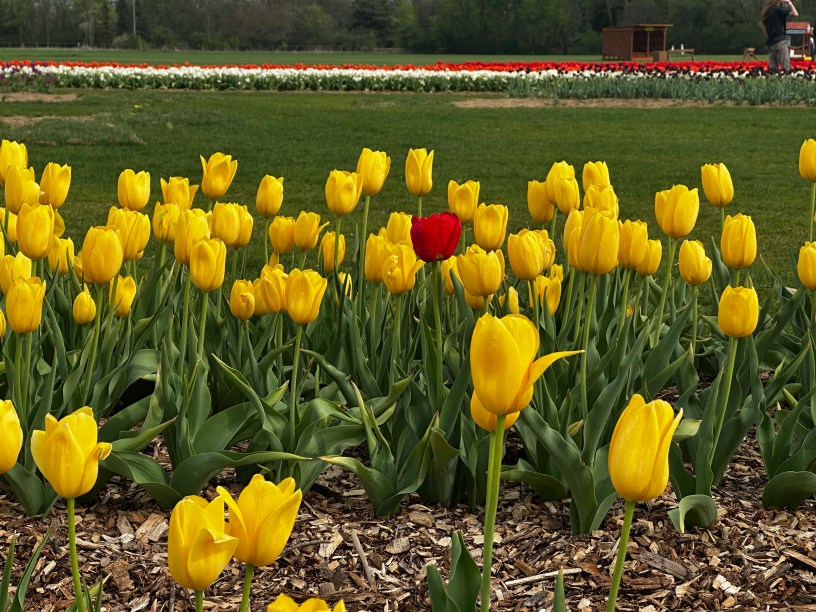
Children of the diaspora are familiar with this, too. We have roots that can’t seem to take hold in the land that sprouted us, where we’re seen as weeds. But even in our homelands, they can’t find purchase.
So our communities cultivated little greenhouses, our roots drawing sustenance, both native and new, within hydroponic enclosures, forming an entirely new ecosystem. Still, nothing quite replaces the grounded feeling of soil and the nourishment it brings.
I wonder about that now. Over the years, our communities healthier and rooted in this soil, blooming with the cultural fertilizer of the lands we were uprooted from. We have begun to bear fruit, exploring our new terrain in ways that fulfilled our parents’ wildest dreams. We built something unique and flourishing—a blend of cultures under a strong banner of faith. Our teachers are from Palestine and Philadelphia. Algeria and Sudan. We war over the superiority of biryani, kabseh, or jollof. We joke in each other’s dialects and compare stories of micro-aggressions like battle scars.
I am heh-na. I am a Syrian-American Muslim. I have a community and it is beautiful.
And as I visit my family and my homeland this summer, I can walk that angry diaspora kid that still lives within me through the streets of her ancestral land. We’ll smell jasmine and reconnect with the family we were separated from, and we’ll talk about the circumstances that made it that way.
We’ve all been haunted, in one way or another, by what has been done to Syria over the decades. While Syrians will continue to feel its aftershocks, it’s now a time for reunion and hope. For swapping stories and tracing family trees. Because while we may have been uprooted, our branches have found the sun, and our roots—though scattered—are growing back toward one another.
 Hana Al-Harastani